
Civil construction shapes the essential infrastructure that communities and industries depend on every day. Roads, bridges, drainage systems, water networks, subdivisions, pathways and public spaces all rely on skilled civil contractors to plan, prepare and deliver safe, functional assets.
Still, many clients are unsure what this field actually involves, how civil contractors differ from general builders, and which one is most suitable for their next project. Here, we explain what civil construction is, the activities it covers, and the factors to consider before you break ground.
What is civil construction?
Civil construction is the building and maintenance of private or public infrastructure, including roads, bridges, dams, railways, tunnels, airports, water and sewer systems, and land subdivisions.
Working alongside civil engineering, this discipline focuses on the execution of projects across four broad categories:
- Transport infrastructure, such as highways, rural roads, rail corridors, and airport runways.
- Water infrastructure, including dams, reservoirs, stormwater drainage, and sewer networks.
- Earthworks and land development, covering bulk earthmoving, site cutting and filling, retaining walls, and residential or industrial subdivisions.
- Resource and utility infrastructure, including haul roads, tailings dams, and access works for mining and energy projects.
Whether for government, industrial, commercial or residential projects, the civil construction process typically moves through five general stages: planning and design, site investigation, earthworks, construction of the asset, and handover with ongoing maintenance.
To get the job done, this integral industry calls for civil engineers, contractors, surveyors, project managers, and plant operators. Together, we work to achieve client goals on time and within budget, while adhering to local regulations and safety standards.
How civil construction differs from general construction

Civil construction involves delivering and maintaining essential infrastructure, such as roads, water systems and other large-scale, often publicly-owned assets. In contrast, general construction focuses on residential and commercial building works, whether it’s renovating a house or developing an office space.
These two fields may share some equipment and trades, but they tend to differ in scope, regulations, risks, and delivery approach.
| Factor | Civil construction | General construction |
|---|---|---|
| Primary output | Infrastructure assets, like roads, bridges, dams, water reservoirs, drainage, rail corridors, and subdivisions | Occupied structures, such as houses, offices, shopping centres, warehouses, and apartments |
| Usual clients | State and federal government agencies, local councils, mining and resource companies, land developers, utility providers | Private homeowners, property developers, commercial tenants, retail and hospitality operators |
| Funding sources | Public works budgets, industrial capital expenditure, and private investment | Private investment, commercial finance, construction loans |
| Regulatory frameworks | Australian Standards, Austroads guidelines, state road authority specifications, National Construction Code (NCC) Volume Three for plumbing and drainage works, EPA environmental approvals, and council development consent | Australian Standards, NCC Volumes One and Two (Building Code of Australia), local council planning controls, and building certifier sign-off |
| Site scale | Linear corridors, large-footprint earthworks sites, and dispersed work zones | Defined building footprint on a single lot or contiguous parcel |
| Working environment | Live and operational settings, such as open roads, active mine sites, working rail, and public-facing zones | A controlled site with hoarding, fencing, and managed access |
| Common plant and equipment | Heavy plant such as excavators, dozers, graders, scrapers, rollers, water carts, and dump trucks | Cranes, Mobile Elevating Work Platforms, scaffolding, formwork, and hand tools |
| Core trades and roles | Civil engineers, plant operators, pipelayers, surveyors, traffic controllers, concreters, and project managers | Carpenters, electricians, plumbers, plasterers, tilers, painters, and project managers |
| Key risks | Traffic management, environmental controls, ground conditions, weather exposure, and public safety | Trade sequencing, services coordination, defects, weatherproofing, and fitout quality |
| Typical handover focuses | Long-term asset performance, integration with existing infrastructure, and an ongoing maintenance schedule to ensure safety | Practical completion, defects liability period, and an occupation certificate |
For councils, developers, and asset owners, understanding where the line sits between these disciplines is crucial. Choosing the wrong contractor for a project can lead to scope gaps, compliance failures, and costly delays.
Ultimately, the right choice depends on what you’re constructing, the resources required and how it will be regulated. For instance, a general building contractor may not have the plant, traffic management capability, or environmental controls needed for a council road upgrade.
When scoping a project, you need to consider the:
- Asset itself, whether it’s infrastructure or a building
- Applicable regulations, standards, and approvals
- Site conditions and constraints, including access, staging, and any live operations
Getting this right early will help to protect your budget, programme, and compliance.
Core components of civil construction
Civil construction covers the physical activities needed to create functional developments, transport networks and utilities. Each component plays a different role in preparing sites, connecting communities and driving development.
Road construction, rehabilitation & maintenance
To support safer, smoother transportation networks, civil contractors can build, upgrade and maintain highways, local roads, access roads, intersections, car parks and hardstand areas.
This work spans excavation, drainage, pavement construction, resurfacing, kerbing, line marking and scheduled maintenance.
With careful planning and site management, road projects improve access, extend pavement life, curb safety risks and limit disruption for existing road users.
Water infrastructure & underground services
Civil infrastructure facilitates the supply, movement, storage and treatment of water across residential, commercial, industrial and regional projects.
This can include stormwater systems, pipelines, pump stations, detention basins, drainage networks and treatment-related infrastructure.
Civil contractors also install and protect underground services such as water, sewer, electrical and communications assets.
Accuracy is critical here. Crews need to pinpoint service locations, excavate carefully and meet stringent engineering and safety requirements from start to finish.
Culverts, causeways & bridgeworks
Culverts, causeways and bridgeworks control water movement and maintain access across creeks, drainage channels, flood-prone areas and uneven terrain. This helps to protect roads, properties and surrounding infrastructure from erosion, washouts and water damage.
These projects often involve site preparation, excavation, bedding, installation, backfilling, concrete works and erosion control. The goal is to build strong, reliable crossings that hold up under real site conditions.
Concrete works
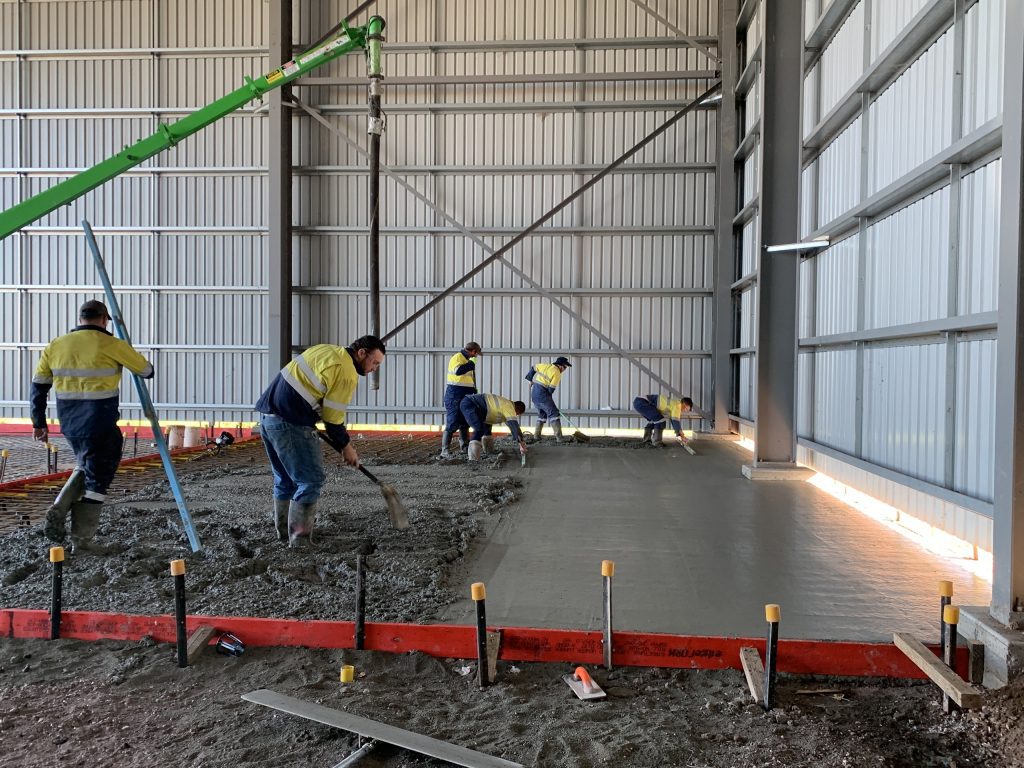
Concrete plays a key role in civil construction because it gives infrastructure strength, structure and long-term stability. Civil concrete works include slabs, footpaths, kerbs, channels, pits, headwalls, retaining walls, foundations and structures around underground services.
Quality concrete work depends on precise excavation, formwork, steel fixing, pouring, finishing and curing. Done correctly, it creates infrastructure that performs under pressure and stands up to heavy use.
Industrial & residential subdivisions
Subdivision works turn land into functional, service-ready lots for homes, businesses and industrial developments. Civil contractors manage the works needed to prepare the site and connect it to essential infrastructure.
These include bulk earthworks, roads, stormwater drainage, sewer and water services, electrical and communications conduits, driveways, footpaths, kerbs and concrete works.
For developers, an experienced civil team can make the process cleaner, faster and easier to manage.
The importance of choosing a reliable civil construction company
Quality civil construction delivers safe, enduring assets that meet design specifications and satisfy regulatory requirements, while preventing expensive rework and structural failures.
On the other hand, substandard infrastructure can become a long-term cost and danger to the council, the asset owner, and the public who use it.
Here’s why it pays to choose a reliable contractor for your civil construction project:
Public and worker safety
Civil assets carry vehicles, water, and people. A poorly compacted road base, a bridge built outside tolerance, or a subdivision that floods after the first storm can all put lives at risk.
Rigorous testing of concrete, steel, aggregate, and compaction is the only way to confirm an asset will perform under the loads and conditions it was designed for.
Compliance with rigorous standards
Civil works in Australia are governed by a range of regulations, including Australian Standards (such as AS 3600 for concrete and AS 1289 for soil testing), Austroads guidelines, state road authority specifications, and the relevant volumes of the National Construction Code.
With strict quality control, civil contractors can ensure compliance, satisfy hold points, and pass independent verification. Without it, certifiers can withhold sign-off and stall your project.
Whole-of-life cost
Defects caught during construction cost a fraction of what they cost after handover. For example, reactive pothole repair is usually much more expensive than delivering a robust pavement properly from the outset.
Ultimately, high-quality materials and workmanship can lower maintenance bills, extend asset life, and protect capital investment.
Programme certainty
Unnecessary rework puts your programme at risk. From out-of-spec earthworks to rejected piping, each setback pushes out completion dates and triggers liquidated damages. A disciplined QA system helps to flag problems at the test stage to keep civil projects on track.
Community and economic impact
Quality infrastructure pays back the community that funds it. Well-designed tunnels cut commute times and fuel costs. Sound drainage prevents flood damage to homes and businesses. Durable haul roads keep mines productive.
Poor infrastructure does the opposite, draining productivity through congestion, vehicle damage, and unplanned closures.
Contractors who deliver to spec, on budget, and on time empower the communities and industries that depend on each asset.
FAQs
What are civil works versus civil construction?
Technically speaking, civil works covers the essential tasks involved in infrastructure delivery, such as earthworks, pipeline installations and road resurfacing. Meanwhile, civil construction refers more broadly to the discipline or sector as a whole.
That said, most people in the industry use these terms interchangeably. Whether a contract calls it civil works or civil construction, the deliverables are generally the same.
How do civil construction and civil engineering tie in together?
Civil engineering and civil construction are sister disciplines. Engineering designs the asset, and construction builds it. That’s why every civil infrastructure project needs both, with the two teams working hand in hand from concept to handover.
The two disciplines overlap at every stage of a project:
- Design development: engineers produce the drawings and specify the materials, which contractors review for buildability
- Approvals: engineers certify the work against Australian Standards and prepare relevant approval submissions, while contractors hold the construction certificate
- Site supervision: engineers verify the work matches the design, and contractors deliver it
- Inspection and testing: both contribute to the inspection and test plan
- Maintenance: engineers specify the regime, whereas contractors carry out the works
When selecting a civil contractor, it’s important to ensure both functions are covered by experienced professionals who carry the correct accreditation.
Who typically needs civil construction services?
Any clients who need to build, upgrade or maintain physical infrastructure should arrange civil construction services. These include:
- Mining and resource companies for haul roads, tailings dams, hardstands, and site access works
- Land developers for residential, industrial, and commercial subdivisions
- Local councils for road upgrades, drainage, footpaths, and public infrastructure
- State and federal governments for major roads, bridges, and public works
- Utility providers for water, sewer, power, and telecommunications networks
- Industrial and commercial operators for hardstands, internal roads, and bulk earthworks
- Agricultural and agribusiness operators for dams, access tracks, and water infrastructure
Every client brings a different brief. Mining operators want uptime and crews that work safely alongside live production. Developers want programme certainty and tight cost control. Councils want compliance, community outcomes, and assets built to last.
At Stripes, we understand these priorities and deliver each infrastructure project accordingly. Enquire now to get started.
What are the common challenges in the civil construction industry?
The most common challenges in the civil construction sector are ground conditions that differ from the design, weather disruption, programme delays, budget pressure, design changes, and coordination across multiple subcontractors and authorities.
Let’s take a closer look at each potential obstacle:
- Unexpected ground conditions: Soft spots, rock, high water tables, or contamination discovered mid-build force redesign and rework. A thorough geotechnical investigation at the design stage can pick these up before they become a problem on site.
- Weather and seasonal exposure: Rain halts earthworks, heat shuts down concrete pours, and floods wash out weeks of progress. Programmes need realistic weather allowances built in from the start, based on local seasonal data rather than best-case assumptions.
- Design changes and incomplete documentation: Late drawings, mid-build revisions, and errors drive rework, claims, and disputes. Early contractor involvement can help flag potential clashes before they impact construction.
- Programme delays: Setbacks compound. For instance, a late utility relocation pushes out earthworks, which pushes out pavement, which pushes out handover. Daily programme tracking and clear escalation paths catch issues while they’re still minor.
- Cost overruns: Material prices move, scope creeps, and contingency drains faster than expected. Detailed estimating, transparent procurement, and live cost reporting give you the visibility to make cost-effective decisions.
- Skilled labour shortages: Experienced civil construction workers are in short supply. Contractors who invest in training and keep their crews together tend to deliver more reliably than those relying on a rotating workforce.
- Workplace health and safety risks: Heavy plant, deep excavations, live traffic, working at height, and live utilities are serious hazards. Clear, consistent safety protocols are the only way to manage them.
- Lack of stakeholder coordination: Councils, road authorities, utility owners, neighbours, and the public all have a stake. Early engagement and clear communication help prevent the disputes that derail programmes.
- Poor quality control: Out-of-spec materials, missed compaction tests, and skipped hold points can lead to defects and disputes at handover. ITPs, NATA-accredited testing, and disciplined supervision shut these down before they reach the client.
- Environmental and regulatory hurdles: Sediment, dust, noise, water discharge, and protected species are all regulated, with non-compliance bringing fines, stop-work notices, and reputational damage. That’s why environmental management plans need to be resourced and enforced every day.
The good news is that each of these challenges is manageable with early planning, expert site teams, and disciplined project controls. Talk to Stripes to learn more.
Partner with a precision-led civil construction company
With the right skillsets, resources and approach, civil infrastructure built today can carry communities and industries for decades.
At Stripes, we draw on over 50 years of civil industry expertise to deliver engineering and construction projects for private and public sector clients across Australia. From road construction in cities to dam maintenance on remote sites, we’re ready to mobilise fast and meet strict specifications.
With precision, safety, and compliance at the core, our systems are certified to ISO 9001:2015 (Quality Management), ISO 14001:2015 (Environmental Management), and ISO 45001:2018 (Occupational Health and Safety).
Whatever the scale or complexity, gain the plant, the crews, and the technical expertise to complete civil works on time and on budget.
Get in touch today.
