
Connect communities across the country with dependable and durable roadworks.
At Stripes, we partner with local councils, private developers, and transport infrastructure clients to deliver end-to-end road construction in Australia.
Managing preparation, drainage, grading, and surfacing, our regional experts strive to ensure excellence, compliance, and streamlined execution at every stage. From sealed and unsealed roads to access ways and drainage, explore reliable solutions for even the most remote sites.
Trusted for total project delivery

























FAQs
Reliable road construction underpins safety, productivity and liveability across Australia. Strong, durable roads not only make driving easier but also facilitate business operations, support regional economies, and improve the quality of life for local communities.
When a road is constructed and maintained properly, it reduces vehicle wear and tear, cuts travel times, and helps local drivers, emergency services, and freight operators get from A to B safely.
At Stripes, we engineer and construct a full range of road infrastructure, from local access roads and unsealed rural routes to major sealed roads, subdivisions, intersections and supporting drainage systems.
If you need to build or upgrade any type of road or supporting infrastructure, partner with Stripes for total project delivery in all sectors.
Road construction usually follows six key stages: planning, detailed design, earthworks, aggregate placement, paving and final quality control.
1. Planning
We bring together geotechnical investigations, environmental and heritage assessments, traffic forecasting and approvals to establish the project’s scope, risks, budget and delivery pathway.
2. Detailed design
Our engineers finalise the road alignment, pavement structure, drainage systems and utility coordination. During this phase, we create accurate construction plans, including detailed drawings, models and set-out data.
3. Earthworks
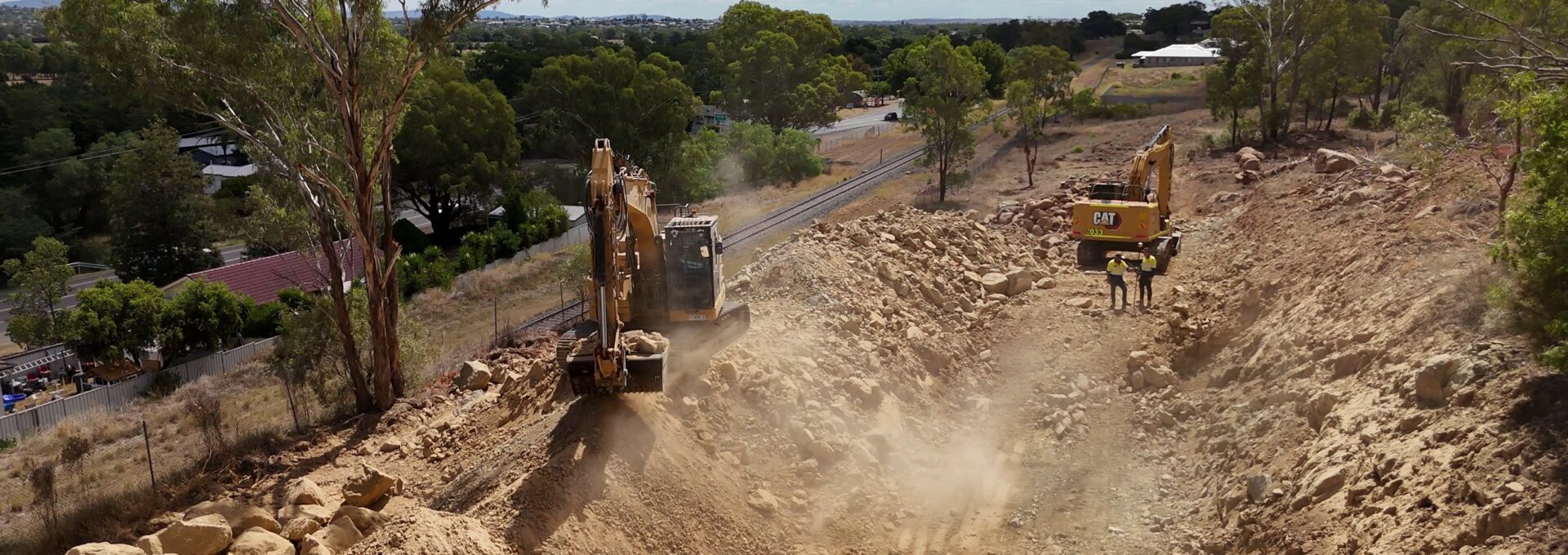
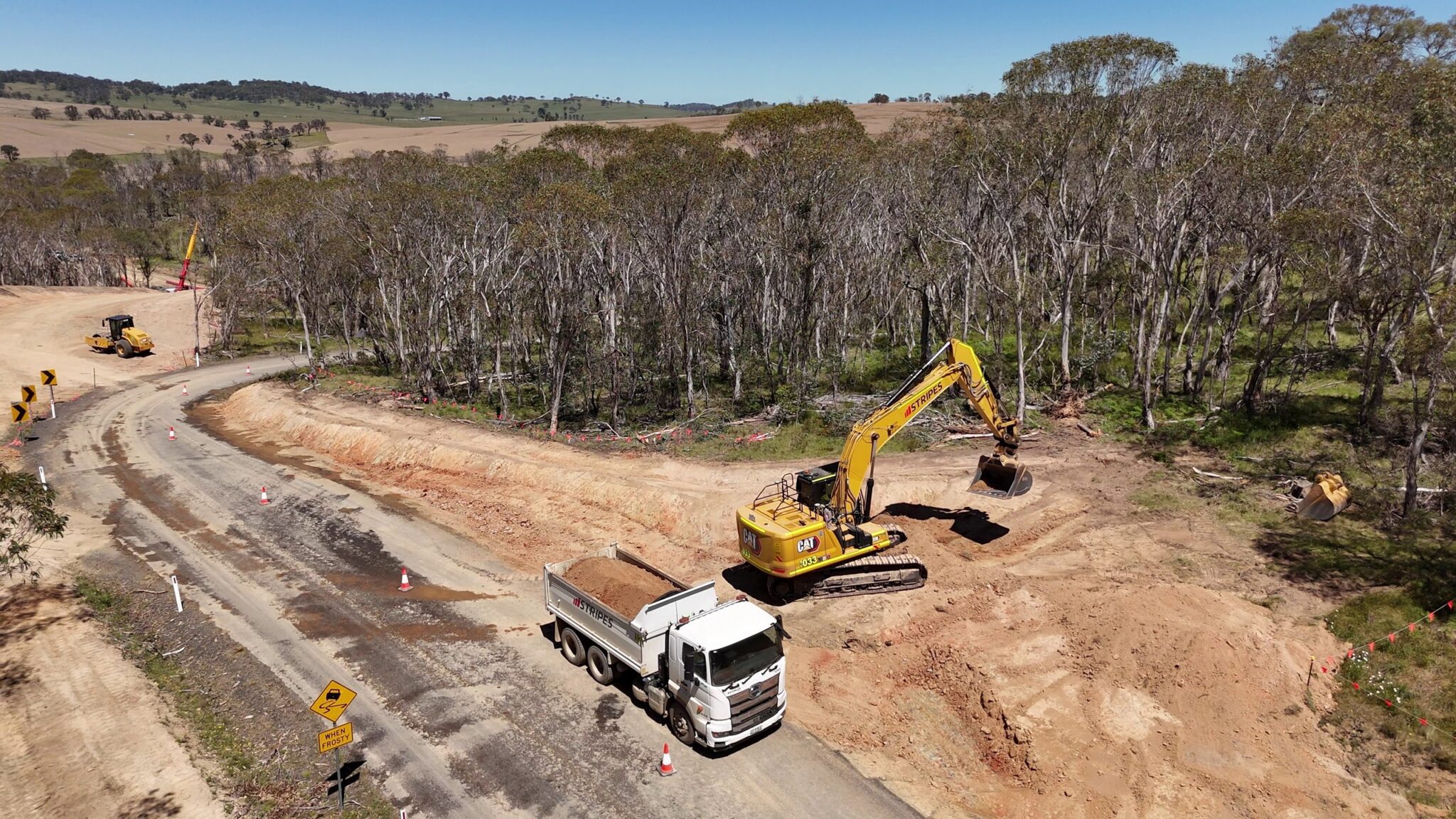
Earthworks prepare the site by clearing vegetation, shaping the terrain through cut-and-fill, stabilising the subgrade, and forming embankments and drainage paths.
At the end of this stage, a stable, well-compacted formation is ready to receive the pavement layers.
4. Aggregate placement
Next, the structural pavement layers are built. Subbase and basecourse layers, usually comprising crushed rock or stabilised material, are spread in controlled thicknesses.
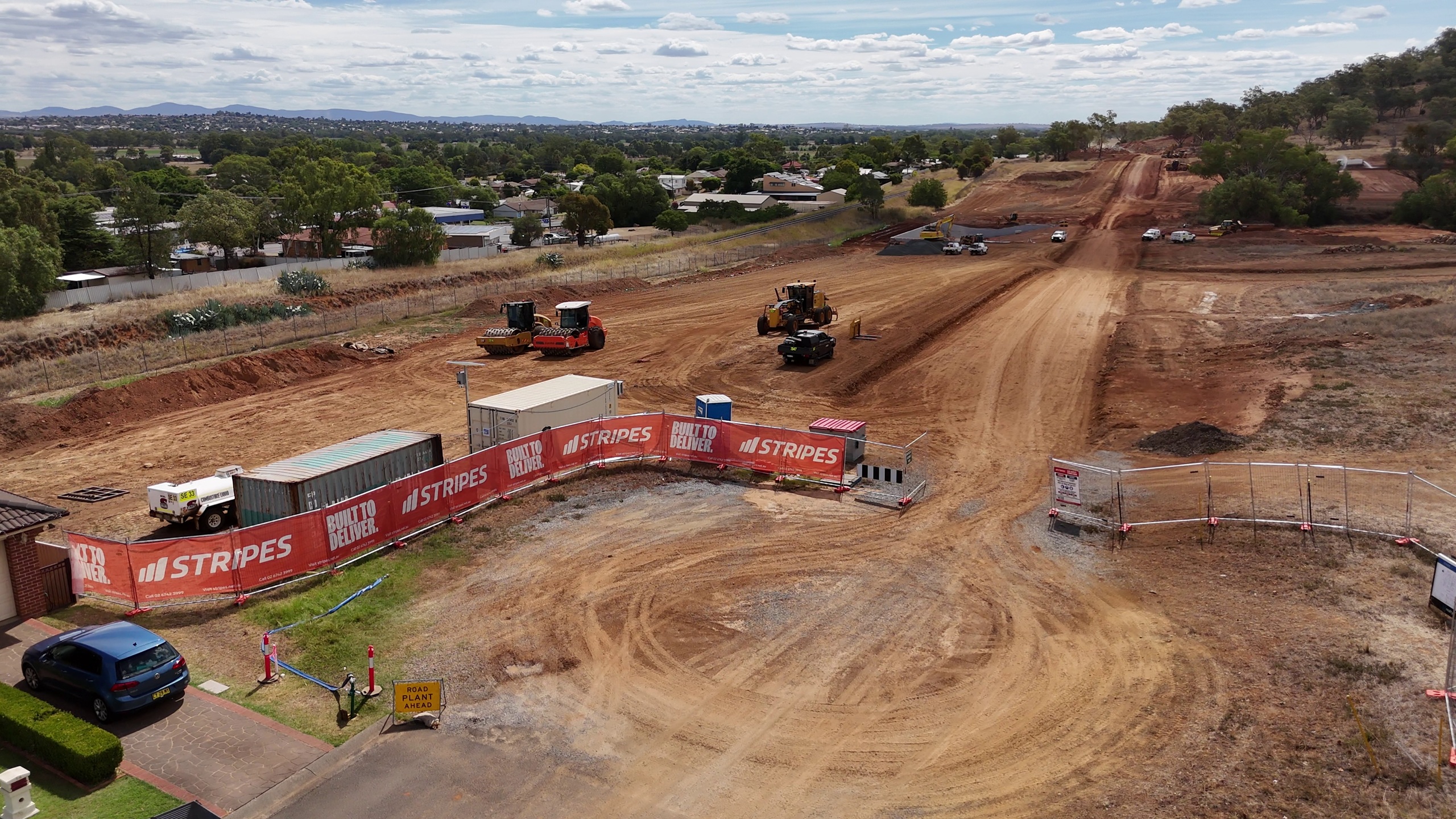
Each layer is trimmed with graders and compacted with rollers to achieve the specified density, thickness and smoothness. Then we review the levels and crossfalls to ensure the finished surface will drain correctly and meet design tolerances.
These layers share the load from traffic and protect the prepared subgrade beneath.
5. Paving
The final running surface is applied. For most Australian roads, this is a sprayed bituminous seal and/or asphalt, placed using a paving machine and compacted with steel and pneumatic rollers.
On heavy-duty or specialised applications, a concrete pavement may be used instead, placed with slipform pavers and finished with texture and joints for durability.
The surfacing layer provides skid resistance, weather resistance and a smooth ride for road users.
6. Quality control and finishing
Finally, we confirm the road meets all specifications and regulations through testing and inspections before completing line marking, signage, barriers and reinstatement works.
As each road project brings distinct challenges and requirements, we will devise a tailored timeline of stages, so you have a clear view of the entire process from day one.
The time it takes to build a road varies depending on the road type, location and project complexity. Factors such as weather, environmental approvals, materials availability and staging requirements also influence the overall duration.
As no two transport infrastructure projects are the same, we will provide you with an estimated timeline based on your unique requirements.
To manage traffic throughout your road construction project, we will develop a tailored Traffic Management Plan that outlines detours, lane closures, temporary speed limits, barriers and signage designed to keep road users and workers safe.
Depending on the site conditions, temporary traffic lights or certified traffic controllers may also be used to maintain efficient vehicle flow.
Ultimately, we’ll strive to minimise disruption while ensuring compliance with local and state road safety requirements.
We typically deliver road construction services under lump-sum, schedule-of-rates or subcontract agreements, depending on project scope, risk allocation and client requirements.
Pricing considers design complexity, material quantities, site conditions and delivery timeframes. Before any work begins, you will receive a detailed, itemised proposal outlining inclusions, exclusions, milestones and documentation requirements.
This rigorous approach ensures transparency, clear expectations and consistent communication from the first meeting to the final handover.
